
It's difficult to be a law-abiding citizen. You have to fall in line under the heat of the sun to pay your taxes. It's good that some banks are accepting payments. I did just that and became a good citizen in just a matter of 15 minutes.
Now I have all the right to complain about bad roads, the rising cost of living and the human rights violations that are, most of the times, not addressed by authorities. I paid my taxes, paid my dues, did my part as a Filipino, our government should be doing its part too.
Monday, April 16, 2007


Sunday, April 15, 2007
As expected, Pacquiao won
Pacquiao won.
Filipinos, including Rep. Darlene Antonino-Custodio, were grateful after Manny brought "honor" to the country by beating the hell out of Jorge Solis.
Good for Manny. He will surely bring home the money. Good for all Pinoys. We had a temporary break from the boredom of our poor existence. There was even free merienda in some sports complex in Manila courtesy of local politicians.
Good for me and my colleagues. We had to stay in the office for almost 20 hours now to make sure the world will be informed what happens to the "people's champion."
I wonder why we're so excited about the outcome of the Pacquiao-Solis fight when we were so sure anyway that Manny would win.
It's just maybe the love for a good fight.
Filipinos, including Rep. Darlene Antonino-Custodio, were grateful after Manny brought "honor" to the country by beating the hell out of Jorge Solis.
Good for Manny. He will surely bring home the money. Good for all Pinoys. We had a temporary break from the boredom of our poor existence. There was even free merienda in some sports complex in Manila courtesy of local politicians.
Good for me and my colleagues. We had to stay in the office for almost 20 hours now to make sure the world will be informed what happens to the "people's champion."
I wonder why we're so excited about the outcome of the Pacquiao-Solis fight when we were so sure anyway that Manny would win.
It's just maybe the love for a good fight.
All eyes on Pacquiao
Pacquiao will win. Most Filipinos are betting on it. He will easily win against Solis in San Antonio, Texas. I doubt if he will have the same easy time against Ms Darlene Antonino in GenSan in the coming elections.
Problems will again be forgotten today. Filipinos will be glued on their television sets. They will watch the "people's champ" slug it out with the Mexican Solis. There will be no campaign sorties later today. Politicians too need to have a rest. And yes, a good time.
All roads in Metro Manila will lead to SM malls where a live telecast of the fight will be shown, at least for those who can afford to buy tickets. Others will have to wait for the delayed telecast over GMA 7. They can use the money for the ticket to buy lunch and merienda.
I will have my own thing to do later today. I have to forget my own daily fights in life. I need to monitor Pacquiao's fight. Win or lose, I have to work.
Problems will again be forgotten today. Filipinos will be glued on their television sets. They will watch the "people's champ" slug it out with the Mexican Solis. There will be no campaign sorties later today. Politicians too need to have a rest. And yes, a good time.
All roads in Metro Manila will lead to SM malls where a live telecast of the fight will be shown, at least for those who can afford to buy tickets. Others will have to wait for the delayed telecast over GMA 7. They can use the money for the ticket to buy lunch and merienda.
I will have my own thing to do later today. I have to forget my own daily fights in life. I need to monitor Pacquiao's fight. Win or lose, I have to work.
Monday, April 09, 2007
The angels flew
I failed to shoot angels on Easter Sunday. I overslept.
Below are some scenes I shot during the Holy Week.


Below are some scenes I shot during the Holy Week.


Sunday, April 08, 2007
Happy Easter!
Holy Week is over. It's Easter. My dog has died. I've never updated my blogs (yes, I have several blogs) and there are so many things to write about.
The elections are here. Yes, we're electing local and national officials. And there are so many things to do.
I saw a man crucified on Good Friday. I went to the empty cross after the crucifixion. There were no nail marks. It's one of those miracles.
I'll try to shoot angels in the morning.
The elections are here. Yes, we're electing local and national officials. And there are so many things to do.
I saw a man crucified on Good Friday. I went to the empty cross after the crucifixion. There were no nail marks. It's one of those miracles.
I'll try to shoot angels in the morning.
Tuesday, February 27, 2007
Things to do and more
So many things to do, so little time. I'm not surprised that I'm enjoying it though.
I was at Bulacan State University this morning for a talk with journalism students. To be with young people is always fun. It reminds me of the days when I watched and listened with amazement at guest speakers and lecturers during convocations and symposia, and wonder how they become what they've become.
I took an FX ride from SM North EDSA to Malolos, paying a P100. It was my first time to travel again to Bulacan. The last time was more than a decade ago. I was surprised and I felt cheated after learning, on my way back home, that the fare was only P70.
Now I know, I told myself.
After Bulacan, it's back to the office for another level of learning - deciding on what stories, photos, etc, to run, following up on other office tasks, and answering calls from friends, including setting an appointment with the Melo Commission to discuss strategies on how to address the unfortunate murder of colleagues.
There's a lot of things to do and, indeed, we're still a long, long way away from achieving what we want to achieve, whatever it is.
Every experience is part of the learning process. I've convinced myself about it a long time ago.
I was at Bulacan State University this morning for a talk with journalism students. To be with young people is always fun. It reminds me of the days when I watched and listened with amazement at guest speakers and lecturers during convocations and symposia, and wonder how they become what they've become.
I took an FX ride from SM North EDSA to Malolos, paying a P100. It was my first time to travel again to Bulacan. The last time was more than a decade ago. I was surprised and I felt cheated after learning, on my way back home, that the fare was only P70.
Now I know, I told myself.
After Bulacan, it's back to the office for another level of learning - deciding on what stories, photos, etc, to run, following up on other office tasks, and answering calls from friends, including setting an appointment with the Melo Commission to discuss strategies on how to address the unfortunate murder of colleagues.
There's a lot of things to do and, indeed, we're still a long, long way away from achieving what we want to achieve, whatever it is.
Every experience is part of the learning process. I've convinced myself about it a long time ago.
Friday, February 16, 2007
Blogger
I'm still doing this post in the old blogger. It's not because I have this tendency to be attached to what's already there. I'm not just in the mood right now to change settings or migrate this blog to the new blogger. I've tried Wordpress, I liked it, but I still come back here.
I've been to the 18th Ninoy Aquino Awards this morning. It's like a reunion, although I observed that a lot of people were absent. It was maybe because of the traffic on Quezon Avenue and Manila.
Here's a toast to this year's fellows - Norman Aquino of BusinessWorld and Prosecutor Ric Cabaron. Enjoy the trip guys and make the most out of it!
I've been to the 18th Ninoy Aquino Awards this morning. It's like a reunion, although I observed that a lot of people were absent. It was maybe because of the traffic on Quezon Avenue and Manila.
Here's a toast to this year's fellows - Norman Aquino of BusinessWorld and Prosecutor Ric Cabaron. Enjoy the trip guys and make the most out of it!
Tuesday, January 02, 2007
New blog, new site
GMANews.TV, where I am managing editor, has finally unveiled its new look on New Year's Day. The site carries a section for bloggers. I've started a new blog there, although it still carries an old entry from another blog. You can read my "official" entries there. Please visit our site and try to click on my blog too. Thank you very much and Happy New Year to all.
Sunday, December 10, 2006
Another blog
I've been experimenting with other blog sites/hosting. I've since mirrored this blog on jotorres.wordpress.com. No worry, as of now the contents are the same. I'm still on the experimentation stage. I've tried the new beta of blogger. It's better the earlier version, which I am using for this blog. I am, however, still waiting for blogger to allow earlier users to migrate content to the new improved and easier version. As of now, I'm enjoying my experiment with wordpress although there are times that the connection to the site slow down.
'The White Man’s Burden'
I just got hold of a copy of Robert D. Kaplan’s “Imperial Grunts” from National Bookstore this afternoon. “Imperial Grunts’ is Kaplan’s reportage on the American military’s operations in various areas in the world, including the Philippines, after the United States declared war against terror.
I just read the book’s prologue where Kaplan compared the poet/writer Rudyard Kipling to another American artist, Frederic Remington. While Kipling celebrated in his works British imperialism, Remington turned imperialism “from fact into heroic myth” when he rode with troops scouting for Indians to subdue.
What caught ignorant me, however, was a footnote on page 10 of Kaplan’s book that reads: “’The White Man’s Burden’ was a poem written by Kipling to urge the United States to intervene in the Philippines in 1899. It is essentially an idealistic poem, though it has often been quoted out of context.”
I searched google for the poem and found a copy in the Washington State University website. Here’s Kipling’s poem.
(1) Cloak, cover.
(2) Since the days of Classical Greece, a laurel wreath has been a symbolic victory prize.
I just read the book’s prologue where Kaplan compared the poet/writer Rudyard Kipling to another American artist, Frederic Remington. While Kipling celebrated in his works British imperialism, Remington turned imperialism “from fact into heroic myth” when he rode with troops scouting for Indians to subdue.
What caught ignorant me, however, was a footnote on page 10 of Kaplan’s book that reads: “’The White Man’s Burden’ was a poem written by Kipling to urge the United States to intervene in the Philippines in 1899. It is essentially an idealistic poem, though it has often been quoted out of context.”
I searched google for the poem and found a copy in the Washington State University website. Here’s Kipling’s poem.
The White Man’s Burden
Take up the White Man's burden--
Send forth the best ye breed--
Go bind your sons to exile
To serve your captives' need;
To wait in heavy harness,
On fluttered folk and wild--
Your new-caught, sullen peoples,
Half-devil and half-child.
Take up the White Man's burden--
In patience to abide,
To veil the threat of terror
And check the show of pride;
By open speech and simple,
An hundred times made plain
To seek another's profit,
And work another's gain.
Take up the White Man's burden--
The savage wars of peace--
Fill full the mouth of Famine
And bid the sickness cease;
And when your goal is nearest
The end for others sought,
Watch sloth and heathen Folly
Bring all your hopes to nought.
Take up the White Man's burden--
No tawdry rule of kings,
But toil of serf and sweeper--
The tale of common things.
The ports ye shall not enter,
The roads ye shall not tread,
Go mark them with your living,
And mark them with your dead.
Take up the White Man's burden--
And reap his old reward:
The blame of those ye better,
The hate of those ye guard--
The cry of hosts ye humour
(Ah, slowly!) toward the light:--
"Why brought he us from bondage,
Our loved Egyptian night?"
Take up the White Man's burden--
Ye dare not stoop to less--
Nor call too loud on Freedom
To cloke (1) your weariness;
By all ye cry or whisper,
By all ye leave or do,
The silent, sullen peoples
Shall weigh your gods and you.
Take up the White Man's burden--
Have done with childish days--
The lightly proferred laurel, (2)
The easy, ungrudged praise.
Comes now, to search your manhood
Through all the thankless years
Cold, edged with dear-bought wisdom,
The judgment of your peers!
(1) Cloak, cover.
(2) Since the days of Classical Greece, a laurel wreath has been a symbolic victory prize.
Wednesday, November 29, 2006
Porn, the Internet and online journalism
Francis Fukuyama declared history, viewed as a clash of ideologies, has ended. He said “liberal democracy” of the type pioneered by the United States might constitute “the final form of human government.”
So what’s next? What is supposed to be the next organizing principle of history?
Cyberspace, of course, Internet enthusiasts say. The Internet is global and personal at the same time. With a computer and a telephone line one can communicate, and even have sex, with anybody around the world. The Internet is supposedly becoming a “new paradigm for human development.”
Nicholas Negroponte, in his 1995 book Being Digital, wrote:
Media, of course, is in the forefront of this new world order. In the Philippines, the Philippine Center for Investigative Journalism has pioneered blogging as a form of interactive journalism. Other media organizations, like the giant broadcast network GMA and the Philippine Daily Inquirer, are preparing to plunge into new forms of journalism in the Internet.
Pornography, however, has been way, way ahead already and has become, for many people, the doorway into the online world.
In its latest installment of articles on addiction, the PCIJ printed a commissioned article I wrote on pornography. The proliferation of relatively cheap bootleg sex DVDs, as well as increasing access to the Internet, has made it easier for some Filipinos to get hooked on porn. To read the article visit GMANews.TV or the PCIJ website.
So what’s next? What is supposed to be the next organizing principle of history?
Cyberspace, of course, Internet enthusiasts say. The Internet is global and personal at the same time. With a computer and a telephone line one can communicate, and even have sex, with anybody around the world. The Internet is supposedly becoming a “new paradigm for human development.”
Nicholas Negroponte, in his 1995 book Being Digital, wrote:
“Computing is not about computers anymore. It is about living. As we interconnect ourselves, many of the values of a nation-state will give way to those of both larger and smaller electronic communities. We will socialize in digital neighborhoods in which physical space will be irrelevant and time will play a different role. Twenty-five years from now, when you look out a window, what you see may be five thousand miles and six time zones away. When you watch an hour of television, it may have been delivered to your home in less than a second. Reading about Patagonia can include the sensory experience of going there. A book by William Buckley can be a conversation with him.”
Media, of course, is in the forefront of this new world order. In the Philippines, the Philippine Center for Investigative Journalism has pioneered blogging as a form of interactive journalism. Other media organizations, like the giant broadcast network GMA and the Philippine Daily Inquirer, are preparing to plunge into new forms of journalism in the Internet.
Pornography, however, has been way, way ahead already and has become, for many people, the doorway into the online world.
In its latest installment of articles on addiction, the PCIJ printed a commissioned article I wrote on pornography. The proliferation of relatively cheap bootleg sex DVDs, as well as increasing access to the Internet, has made it easier for some Filipinos to get hooked on porn. To read the article visit GMANews.TV or the PCIJ website.
Monday, November 27, 2006
Trivia
Doug Engelbart, a Stanford researcher, came to the Philippines in 1968 and came across an essay written by Vannevar Bush and published in the Atlantic Monthly under the title “As We May Think.” Inspired by the essay, Engelbart wrote a program that demonstrated the first working hypertext software he called “oNLine System.”
Engelbart’s software allowed users to browse through multiple windows of text using a small block of wood mounted on a ball to direct the cursor – a prototype mouse. Engelbart, however, was years ahead of his time. It would be another 25 years before the invention of the World Wide Web.
Imagine if Engelbart was not stationed in the Philippines and did not come across Bush’s “As We May Think”? The Internet would not have been the same as we know it today.
Engelbart’s software allowed users to browse through multiple windows of text using a small block of wood mounted on a ball to direct the cursor – a prototype mouse. Engelbart, however, was years ahead of his time. It would be another 25 years before the invention of the World Wide Web.
Imagine if Engelbart was not stationed in the Philippines and did not come across Bush’s “As We May Think”? The Internet would not have been the same as we know it today.
Sunday, November 05, 2006
When things happen on a Sunday
It was supposed to be a lazy Sunday afternoon. I woke up while a heavy downpour tries to drown an army of cockroaches in the drainage outside the gate. I was supposed to just supervise that hanging of posters on the walls of our office that's why I decided to wake up late. I even had my breakfast/lunch at Jollibee at past 2 p.m. (By the way, I was surprised that Jollibee indeed cut on the use of plastic and Styro!)
Then the text messages started coming: There was the encounter between government forces and communist rebels where one insurgent reportedly died; then there was the reported shoot-to-kill order by the Army against a peasant leader; then Defense chief Cruz resigned and Saddam Hussein was sentenced to die by hanging. (Will they literally hang him?) I’ve been reading a biography of Saddam and it’s interesting to learn how his miserable childhood and his growing up years in the town of Tikrit affected his later years.
Again, it’s still work, Saddam or not. News won’t stop coming and it’s already 8 p.m. What was supposed to be a lazy afternoon spent reading Saddam’s biography or browsing back issues of Time or Newsweek that keep piling on my desk or an afternoon watching NCIS ended just like one of those weekday afternoons.
Then the text messages started coming: There was the encounter between government forces and communist rebels where one insurgent reportedly died; then there was the reported shoot-to-kill order by the Army against a peasant leader; then Defense chief Cruz resigned and Saddam Hussein was sentenced to die by hanging. (Will they literally hang him?) I’ve been reading a biography of Saddam and it’s interesting to learn how his miserable childhood and his growing up years in the town of Tikrit affected his later years.
Again, it’s still work, Saddam or not. News won’t stop coming and it’s already 8 p.m. What was supposed to be a lazy afternoon spent reading Saddam’s biography or browsing back issues of Time or Newsweek that keep piling on my desk or an afternoon watching NCIS ended just like one of those weekday afternoons.
Saturday, November 04, 2006
Update
I was enjoying reading new entries from John Nery’s blog only to realize that I’ve been missing my blog too. It has been a while since I last wrote something. I’ve been preoccupied these days with everyday matters – like how to go about doing an article on pornography for the PCIJ, how to achieve symmetry in putting up the frames on the wall of the office, how to manage time between editing stories and making work processes go smoothly, attending meetings, etc.
There are books too that are waiting to be read – Michael Weisskopf’s new book on the war in Iraq lent to me by a dear friend, Paulo Coelho’s The Zahir (also borrowed from a friend), Ghost War, the award-winning book of Steve Coll on terrorism that I started reading last year, a Cuban novel, and several journalism books that I only remember to browse when an invitation to give a lecture comes.
My only respite from the daily, if not hourly, grind is to watch the television series “Rome” and “Prison Break.” The first is a lesson in history while the second is a reminder that things can be done if one puts everything into making it happen, be it breaking out from prison or making a wireframe become a working website.
There are books too that are waiting to be read – Michael Weisskopf’s new book on the war in Iraq lent to me by a dear friend, Paulo Coelho’s The Zahir (also borrowed from a friend), Ghost War, the award-winning book of Steve Coll on terrorism that I started reading last year, a Cuban novel, and several journalism books that I only remember to browse when an invitation to give a lecture comes.
My only respite from the daily, if not hourly, grind is to watch the television series “Rome” and “Prison Break.” The first is a lesson in history while the second is a reminder that things can be done if one puts everything into making it happen, be it breaking out from prison or making a wireframe become a working website.
Saturday, October 07, 2006
Dan Campilan: Brief, brilliant life in journalism
The only time I had the chance to talk with Dan was during a training workshop for GMA News reporters early this year. I presented to the reporters the new website of GMA News and invited them to write stories for the site.
During the break I joined some of them for a chat. Dan was there. Maybe because of my Visayan diction that he introduced himself as Cebuano. He was happy to learn that I too am a Bisaya. He said "daghan na tang Bisaya sa GMA."
He also said he wanted to write. I told him to just start writing. "Maulaw man ko," he said. I told him there's no reason not to try. "There's always a first time," I said.
He was excited. There's a lot of life in him. I wished him the best. I saw a very promising and very eager journalist.
When I woke up this morning I saw several messages on my phone. Some were asking what happened to Dan. Lean, Newsbreak's artist, said Dan is a classmate at PUP's Open University as a first year broadcast communication student.
The man had a dream. As Jessica Soho said, Dan is an inspiration. May his short life inspire us.
Here's a tribute to our colleague:
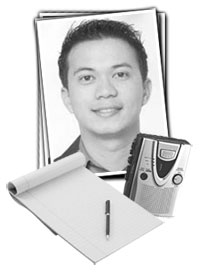
During the break I joined some of them for a chat. Dan was there. Maybe because of my Visayan diction that he introduced himself as Cebuano. He was happy to learn that I too am a Bisaya. He said "daghan na tang Bisaya sa GMA."
He also said he wanted to write. I told him to just start writing. "Maulaw man ko," he said. I told him there's no reason not to try. "There's always a first time," I said.
He was excited. There's a lot of life in him. I wished him the best. I saw a very promising and very eager journalist.
When I woke up this morning I saw several messages on my phone. Some were asking what happened to Dan. Lean, Newsbreak's artist, said Dan is a classmate at PUP's Open University as a first year broadcast communication student.
The man had a dream. As Jessica Soho said, Dan is an inspiration. May his short life inspire us.
Here's a tribute to our colleague:
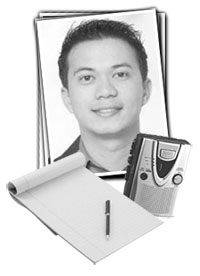
Danifel "Dan" Campilan had a brief but exciting five-year career as a broadcast journalist. It ended in Quezon City the way it started in his home province of Cebu – by accident.
In his iGMA.Tv homepage, Dan recalled his first job: "Aksidente lang ang pagiging broadcaster ko. Pagkatapos ng kolehiyo, nag-work muna ako as a Bingo caller sa Cebu — as in Bingo na sugal: letter B 2. Then I found out na may boses pala ako at kaya magsalita in public."
[My being a broadcaster started by accident. After college, I worked first as a Bingo caller in Cebu — as in Bingo the gambling game: letter B 2. Then I found out that I had the voice and could speak in public.]
And so Dan applied for a job with Bombo Radyo Cebu. Readily, he was hired — but not just because of voice. He had some experience in campus journalism at the Cebu Institute of Technology, where he took a course in Information Technology as a scholar of the Department of Science and Technology.
His first major coverage assignment earned him a promotion.
Curiously, his career rose after he reported on the sinking of the M/V Asia South Korea tragedy in Daanbantayan, Cebu.
"The tragedy happened on December 23, 1999, and Christmas was near. Together with the survivors, we spent our Christmas at the site," Dan wrote.
"It was a major break for my radio broadcast career, because I was promoted on the 27th day of the same month to cover national news in our Bombo News Center in Makati."
Thereafter, his career steadily picked up at every turn that he covered accident, melee, upheaval, one after another.
Memorable stories
His profile offered a summary: "Dan Campilan was practically in the center of many upheavals and shakeups that the country has gone through, from the impeachment of Erap and the swearing in of PGMA to the impeachment bid of Chief Justice Hilario Davide Jr."
He was a young journalist but Dan ran a long list of memorable coverage events.
As a Bombo Radyo Makati reporter, he covered both EDSA Dos and "EDSA Tres," or the siege of Malacañang by pro-Estrada supporters on May Day 2001.
"Di ko makalimutan ang May 1 siege coverage na ito," he recalled.
"Habang nagko-cover sa dispersal ng mga Erap supporters noon biglang umulan ng tear gas at tinamaan ako at nagpulasan na lahat. Para mawala ang anghang sa mata, dinakot ko yung ice cream na tinitinda nung mama sa Mendiola at pinanghilamos. Nagsunuran na rin yung iba. Sorry sa manong, but you saved my life."
For GMA 7, Dan’s diligence and discipline yielded good stories. He was the first to break the story on cases of meninggococcemia in Baguio City.
He reported on the tragedy that befell the people and communities of Infanta, Quezon, after a terrible typhoon in 2005.
Great little lives, beings
But the big political upheavals were not what really caught Dan's fancy.
Some of the stories he found memorable were the features he did on great, little lives and beings, like the one on Juliet Chavez, the first Dumagat to win a beauty contest at the Sabutan Festival.
"Pinakagusto ko rin yung nire-rescue namin yung mga eagle, sawa, at unggoy at iba't iba pang mga hayop na inire-report sa GMA at dinadala namin sa Wildlife Rescue Center," he said. At home, he said he had love birds for pets.
[I liked it best when we would rescue eagles, snakes, monkeys and a variety of other animals, and we would take them to the Wildlife Rescue Center.]
Between tight work schedules, Dan managed to give time to two hobbies.
The first is job-related -- watching TV, art films and documentaries. The other is totally unrelated, even unexpected of a strong and sprightly man – cooking.
Dan had the built of an athlete and was given to sports. In high school, he was a varsity player in volleyball and table tennis, but also dabbled in basketball, badminton, swimming and track.
Dream: To be a farmer
Apart from sports, he was grounded in nature. In fact, if his broadcasting career had not taken off, Dan said he would have wanted to become a farmer.
"Kasi yun ang pangarap ko noon para tulungan ang aking mga lolo't lola sa pagtatanim ng mais sa probinsya. Ha-ha-ha, ang babaw lang ng mga pangarap ko. Kahit ngayon I still want to become a farmer, pero siguro pag nag-retire na kasi kailangan ko kumita."
[My dream is to be a farmer and help my grandfather and grandmother plant corn in the province. Ha-ha-ha, I have such a simple dream. To this day, I still want to become a farmer. Maybe when I retire I would, but for now, I have to earn a living.]
Retirement would have been a long way off except that the lie of life visited Dan so suddenly, just before he could turn 26 years old on November 27.
Since joining GMA News Dan had really been busy, so busy that on August 17, 2005, he started a blog — Kapusong Cebuano. More than a year later all that the blog contains is its first, and unfortunately also last, entry:
"matapos ang ilang linggong trabaho, day-off ako today at gumawa nitong first blog ko.
"trial pa lang ito kasi di ko alam paano mag-blog. hehehe."
[After weeks of work, I finally had a day-off today and so here is my first blog. This is a trial blog for now because I still don’t know how to blog. Hehehe.]
Treasured possessions
At the time of his unfinished blog’s posting, Dan wrote that his mobile phone was his most treasured possession.
It was, after all, the one thing that "keeps me in touch with my family in the province." As important, too, were "my steno notebook and pilot ballpen – the most important items while working in the field."
Just recently, Dan did something for himself for a change. He bought a second-hand car to drive to and from work.
It was, unfortunately, while driving it that he would meet yet another accident that would cap his brief but brilliant career as a broadcast journalist. - GMANews.TV
Monday, October 02, 2006
Victory for Uste!
Thanks to JJ. She said the lizard kisses the ground every evening as punishment for killing her mother. The lizard was supposed to be a woman who killed her mother and, as punishment, the gods turned her into a lizard that must kiss the ground every evening.
Why so, why a woman, not a man, must kill her mother, I don't know.
Luisa Igloria has this entry in her blog:
UST wins over Ateneo, 76-74.
It was not unexpected. I’ve always cheered for Ateneo (where I tried to fathom the mysteries of God in the late 80s), but when UST entered the UAAP finals this year, I could not help but wish my alma mater’s team the best. A lot of what I later learned in life I first heard from Dominican friars in UST.
“I only have one alma mater because there is only one God, and God is a Thomasian,” a UST journalism graduate said.
Congratulations to my alma mater, congratulations to all Thomasians!
Why so, why a woman, not a man, must kill her mother, I don't know.
Luisa Igloria has this entry in her blog:
The elders told stories of how the lizard, among all creatures, understands the mysteries of the universe most because at dusk, at vesper-time, it runs or falls to the earth to kiss the ground. We saw them in the kitchen corners, under the eaves, beneath the windowsill, behind cabinets. More than once someone closed a door by mistake or too quickly lowered a skillet, and its severed tail went skittering across the floor. Thus, because it knows to give up part of itself to save the rest. The rest is a story of regeneration that I admire.
UST wins over Ateneo, 76-74.
It was not unexpected. I’ve always cheered for Ateneo (where I tried to fathom the mysteries of God in the late 80s), but when UST entered the UAAP finals this year, I could not help but wish my alma mater’s team the best. A lot of what I later learned in life I first heard from Dominican friars in UST.
“I only have one alma mater because there is only one God, and God is a Thomasian,” a UST journalism graduate said.
Congratulations to my alma mater, congratulations to all Thomasians!
Sunday, October 01, 2006
The kissing-the-ground act of lizards
Every evening, when I have the time, I always look for house lizards. They are easy to find. They always come down from the ceiling, down the wall, to kiss the ground. I’ve always wondered why.
My father used to tell me a story why lizards kiss the ground every evening, about 6 p.m. I forgot the story already. Is it a kind of punishment from the gods? I can’t remember anymore.
The lizards, however, have been always a reminder to me. I mean their kissing-the-ground act. It reminds me of humility, of remembering, of recognizing from where we all came from.
With so many things to worry, I forget a lot of things, the simple things most of the time, like anniversaries, birthdays, acts of kindness and even the act of saying hello to people, I mean, just to be pleasant to others.
I wonder how come lizards don’t forget their kissing-the-ground act every evening.
Sometimes, when I feel reflective, I do admire the lizards. Aside their not forgetting their daily ritual, I admire them for – well this is a crazy reflection – their humility to remember where they came from. As priests say on Ash Wednesdays: “From dust thou art, to dust you’ll return,” or something to that effect.
Journalism is history in a hurry. That’s what I read last Monday in a journalism book I brought as reference material for a lecture on journalism in Zamboanga City. Life has been always a blur since I started working as a journalist, except maybe during those days and nights I spent in the barrios or in hotel rooms in some foreign country.
I’ve always told myself that it’s therapeutic just to stop for a moment, sit back, relax and just enjoy the ride. Yes, life is a ride and I’ve been enjoying the fast lane for a while now. It’s just funny that many times I don’t listen to myself. Many of us don’t, I supposed.
* * *
I’ve been trying to dig into my files these days to look for some papers – birth certificates, clearances, etc – that must be submitted to the office as part of my employment requirements. It’s not easy, the digging part. I have to look into envelopes, folders and boxes, leaf through old notebooks, books and files.
I’m still looking until now. I’m enjoying the search that I don’t want to find what I’m looking for anymore. I enjoy scanning old notes, books and files – and there are hundreds of them. Then, like ghosts from the past, people jumped from the yellowed pages of notebooks and pads. I have to talk to them, laugh with them, feel their pain and share their anguish.
While friends during my younger years accumulate wealth, here I am collecting dust, digging into dreams written on cheap notebooks, dreams that until now remain to be realized. What a life. But it’s fun.
I just wonder, as I write this, if 20 years from now I will be able to scan these pages, hese posts, this blog, to revisit the past. Will there be dust on my computer screen? What would be the feeling then?
* * *
A very dear friend gave me a book today. It’s Pedro Juan Gutierrez’s “The Insatiable Spider Man”. I intend to read it in the coming days. I scanned the first few pages and I came across sentences like these:
Just look at the lines, the short sentences, the active voice, the drama it brings to the reader sans the adjectives that many of us, lazy, trying-hard-copycat wannabe writers, use to pretend that we too know how to write.
Thanks for the book, my friend, it sure made my day!
My father used to tell me a story why lizards kiss the ground every evening, about 6 p.m. I forgot the story already. Is it a kind of punishment from the gods? I can’t remember anymore.
The lizards, however, have been always a reminder to me. I mean their kissing-the-ground act. It reminds me of humility, of remembering, of recognizing from where we all came from.
With so many things to worry, I forget a lot of things, the simple things most of the time, like anniversaries, birthdays, acts of kindness and even the act of saying hello to people, I mean, just to be pleasant to others.
I wonder how come lizards don’t forget their kissing-the-ground act every evening.
Sometimes, when I feel reflective, I do admire the lizards. Aside their not forgetting their daily ritual, I admire them for – well this is a crazy reflection – their humility to remember where they came from. As priests say on Ash Wednesdays: “From dust thou art, to dust you’ll return,” or something to that effect.
Journalism is history in a hurry. That’s what I read last Monday in a journalism book I brought as reference material for a lecture on journalism in Zamboanga City. Life has been always a blur since I started working as a journalist, except maybe during those days and nights I spent in the barrios or in hotel rooms in some foreign country.
I’ve always told myself that it’s therapeutic just to stop for a moment, sit back, relax and just enjoy the ride. Yes, life is a ride and I’ve been enjoying the fast lane for a while now. It’s just funny that many times I don’t listen to myself. Many of us don’t, I supposed.
* * *
I’ve been trying to dig into my files these days to look for some papers – birth certificates, clearances, etc – that must be submitted to the office as part of my employment requirements. It’s not easy, the digging part. I have to look into envelopes, folders and boxes, leaf through old notebooks, books and files.
I’m still looking until now. I’m enjoying the search that I don’t want to find what I’m looking for anymore. I enjoy scanning old notes, books and files – and there are hundreds of them. Then, like ghosts from the past, people jumped from the yellowed pages of notebooks and pads. I have to talk to them, laugh with them, feel their pain and share their anguish.
While friends during my younger years accumulate wealth, here I am collecting dust, digging into dreams written on cheap notebooks, dreams that until now remain to be realized. What a life. But it’s fun.
I just wonder, as I write this, if 20 years from now I will be able to scan these pages, hese posts, this blog, to revisit the past. Will there be dust on my computer screen? What would be the feeling then?
* * *
A very dear friend gave me a book today. It’s Pedro Juan Gutierrez’s “The Insatiable Spider Man”. I intend to read it in the coming days. I scanned the first few pages and I came across sentences like these:
“He tries to kiss her. She smells the tobacco and alcohol on his breath and feels nauseous. She moves her face quickly to one side and pulls back. The man kisses her neck and licks her. She struggles some more. The man pushes her. Silvia loses her balance and stumbles. He holds her up to prevent her falling. He’s a giant playing with a little bird. Silvia is very slender and frail. She’s still trembling….With his right hand he fishes inside his trousers and pulls out a long black stiff thick prick. Shit. Silvia looks at it. She has to look at it since it’s a few inches from her eyes and she thinks, ‘Christ almighty, I’m really fucked now. Look at the size of it, dammit. If he puts it in me, he’ll split me in half, he’ll kill me, the motherfucker!’”
Just look at the lines, the short sentences, the active voice, the drama it brings to the reader sans the adjectives that many of us, lazy, trying-hard-copycat wannabe writers, use to pretend that we too know how to write.
Thanks for the book, my friend, it sure made my day!
Wednesday, August 30, 2006
UNBOWED
NUJP's 5th Congress Statement
The National Union of Journalists of the Philippines (NUJP) wraps up its 5th Congress held August 27 to 28 in Tagaytay City secure in the knowledge that the free and independent Philippine media's staunch defense of freedom of the press and of expression has expanded the frontlines with more committed journalists rallying to the cause.
But at the same time, this Congress also reflected the sober realities journalists face as the war against civil liberties in the country appears to have intensified and reached a more vicious stage.
As our keynote speaker, the venerable Vergel O. Santos, reminded us in the wake of National Security Adviser Norberto Gonzales' ominous pronouncement about the supposed communist infiltration of the media, "We may even be in bigger trouble than we think."
As he so aptly pointed out, the 50 or so journalists slain since Gloria Macapagal-Arroyo came to power "are enough to staff one national daily and that, therefore, their murder means the silencing of one potential collective voice of public conscience - silenced for precisely doing what it is in its perfect nature to do so - speak."
Not to mention the often odious working conditions and even more odious economic benefits so many of our colleagues, especially those in the frontlines, the provinces where the calling to serve the people's right to know is most needed, have to bear with.
And there among us, delegates to the NUJP's highest policy-making body, were living proof of the risks and dangers we face.
Tony Abejo of the NUJP's Ozamiz chapter is publisher and editor of the Malindang Tribune, a family-run community paper in Oroquieta City, Misamis Occidental.
Carolina Montilla of the NUJP-Tacloban is publisher/editor of the Eastern Times, based in Leyte's capital city and serving Eastern Visayas. Maureen Japzon is an editor and feature writer of the community paper and, incidentally, was voted by the Congress to the
NUJP National Directorate.
Last Friday, the eve of his travel to Tagaytay, Abejo received no less than eight text messages on his cellular phone, warning him to "be cautious" and, eventually, suggesting that he divide what little wealth he had among his wife and children because he would "rest in peace."
Tony can only think of one reason for the ominous messages: Retribution for using his newspaper as a platform to rail away at official incompetence and corruption.
Indeed, for Tony, threats have been a constant companion for the last 14 years. This time, though, he acknowledged, they appeared to be striking closer to home, the venom seemingly more potent than before.
Not that he fears as much for himself as for the future of the harbinger of truth he has worked so hard to establish if those who seek to slay him - and the truth along with him - succeed.
Roli Montilla is no stranger to the dangers that face the Philippine press either.
When Martial Law was declared, her colleagues at the national daily she used to work for had to all but bodily shove her out of the country to escape the wrath of the dictatorship.
She returned from exile and to the profession she loves. Only to find that the dangers she faced then remain and have, in fact, grown in the midst of our supposedly restored democracy.
It is not only Roli who is at risk but practically everyone who works for and with her at the Eastern Times.
In July, a Samar-based columnist for her paper received a letter bordered in black ribbon from an "Anti-Communist League" telling him to "regret what you have done." Since then, Roli told the Congress, the columnist has reported being trailed by motorcycle-riding men, the dreaded common thread in the pattern of murders that has ravaged the ranks of both the Philippine press and legal dissenters.
As have two of her staff reporters in Tacloban, one of them treated to the sight of an arrogantly flaunted bulge at the waist.
Roli and Maureen have been receiving text threats regularly.
That Tony, and Roli and Maureen, notwithstanding the personal worries that weighed heavy on them, showed up at the Congress and lent their time and experience to strengthening the NUJP is a tribute to their courage and dedication and the truism that, indeed, real strength lies in unity.
The unity of those who share the same dream of a free and independent Philippine press serving the people's right to know and their right to free expression, the unity of those who together wage battle against those who seek to stamp out the truth in pursuit of selfish interests.
Tony, Roli, Maureen, the writers of the Eastern Times and all of our threatened colleagues are what the International Federation of Journalists fittingly paid tribute to, Filipino journalists who "continue to strive for increased professionalism and a strong, independent and free media" and "defend the public's right to know, despite regular and violent attacks from all sides."
They are, as Vergel Santos fittingly observed, "freedom's last line of defense" in the face of "one evidently desperate president," a national security adviser "out of an old dangerous mold of official enforcers - those programmed to feel more needed as their bosses feel more insecure," their favorite general, "who seems to relish being called 'executioner' as an affirmation of efficiency - efficiency in a barbaric sense," and a government gripped by an "official cold-bloodedness and twisted sense of retributive proportion."
Our threatened colleagues are the raison d'etre of the NUJP. They ARE the NUJP. And they are the best proof that, at the end of this arduous path, the Philippine press and the Filipino people we serve will emerge unbowed, triumphant.
Jose Torres Jr.
Chairperson
August 29, 2006
The National Union of Journalists of the Philippines (NUJP) wraps up its 5th Congress held August 27 to 28 in Tagaytay City secure in the knowledge that the free and independent Philippine media's staunch defense of freedom of the press and of expression has expanded the frontlines with more committed journalists rallying to the cause.
But at the same time, this Congress also reflected the sober realities journalists face as the war against civil liberties in the country appears to have intensified and reached a more vicious stage.
As our keynote speaker, the venerable Vergel O. Santos, reminded us in the wake of National Security Adviser Norberto Gonzales' ominous pronouncement about the supposed communist infiltration of the media, "We may even be in bigger trouble than we think."
As he so aptly pointed out, the 50 or so journalists slain since Gloria Macapagal-Arroyo came to power "are enough to staff one national daily and that, therefore, their murder means the silencing of one potential collective voice of public conscience - silenced for precisely doing what it is in its perfect nature to do so - speak."
Not to mention the often odious working conditions and even more odious economic benefits so many of our colleagues, especially those in the frontlines, the provinces where the calling to serve the people's right to know is most needed, have to bear with.
And there among us, delegates to the NUJP's highest policy-making body, were living proof of the risks and dangers we face.
Tony Abejo of the NUJP's Ozamiz chapter is publisher and editor of the Malindang Tribune, a family-run community paper in Oroquieta City, Misamis Occidental.
Carolina Montilla of the NUJP-Tacloban is publisher/editor of the Eastern Times, based in Leyte's capital city and serving Eastern Visayas. Maureen Japzon is an editor and feature writer of the community paper and, incidentally, was voted by the Congress to the
NUJP National Directorate.
Last Friday, the eve of his travel to Tagaytay, Abejo received no less than eight text messages on his cellular phone, warning him to "be cautious" and, eventually, suggesting that he divide what little wealth he had among his wife and children because he would "rest in peace."
Tony can only think of one reason for the ominous messages: Retribution for using his newspaper as a platform to rail away at official incompetence and corruption.
Indeed, for Tony, threats have been a constant companion for the last 14 years. This time, though, he acknowledged, they appeared to be striking closer to home, the venom seemingly more potent than before.
Not that he fears as much for himself as for the future of the harbinger of truth he has worked so hard to establish if those who seek to slay him - and the truth along with him - succeed.
Roli Montilla is no stranger to the dangers that face the Philippine press either.
When Martial Law was declared, her colleagues at the national daily she used to work for had to all but bodily shove her out of the country to escape the wrath of the dictatorship.
She returned from exile and to the profession she loves. Only to find that the dangers she faced then remain and have, in fact, grown in the midst of our supposedly restored democracy.
It is not only Roli who is at risk but practically everyone who works for and with her at the Eastern Times.
In July, a Samar-based columnist for her paper received a letter bordered in black ribbon from an "Anti-Communist League" telling him to "regret what you have done." Since then, Roli told the Congress, the columnist has reported being trailed by motorcycle-riding men, the dreaded common thread in the pattern of murders that has ravaged the ranks of both the Philippine press and legal dissenters.
As have two of her staff reporters in Tacloban, one of them treated to the sight of an arrogantly flaunted bulge at the waist.
Roli and Maureen have been receiving text threats regularly.
That Tony, and Roli and Maureen, notwithstanding the personal worries that weighed heavy on them, showed up at the Congress and lent their time and experience to strengthening the NUJP is a tribute to their courage and dedication and the truism that, indeed, real strength lies in unity.
The unity of those who share the same dream of a free and independent Philippine press serving the people's right to know and their right to free expression, the unity of those who together wage battle against those who seek to stamp out the truth in pursuit of selfish interests.
Tony, Roli, Maureen, the writers of the Eastern Times and all of our threatened colleagues are what the International Federation of Journalists fittingly paid tribute to, Filipino journalists who "continue to strive for increased professionalism and a strong, independent and free media" and "defend the public's right to know, despite regular and violent attacks from all sides."
They are, as Vergel Santos fittingly observed, "freedom's last line of defense" in the face of "one evidently desperate president," a national security adviser "out of an old dangerous mold of official enforcers - those programmed to feel more needed as their bosses feel more insecure," their favorite general, "who seems to relish being called 'executioner' as an affirmation of efficiency - efficiency in a barbaric sense," and a government gripped by an "official cold-bloodedness and twisted sense of retributive proportion."
Our threatened colleagues are the raison d'etre of the NUJP. They ARE the NUJP. And they are the best proof that, at the end of this arduous path, the Philippine press and the Filipino people we serve will emerge unbowed, triumphant.
Jose Torres Jr.
Chairperson
August 29, 2006
Thursday, August 24, 2006
Shakespeare at 2 o’clock in the morning
It’s past 2 o’clock in the morning and I’m fighting not to close my eyes as members of the House of Representatives explain their vote whether to junk or not the impeachment complaint filed against President Arroyo.
Lack of sleep is one of the hazards of the trade, especially when covering politicians who just love to talk. Sometimes it’s fun. I mean the coverage, not the politicians. One has to learn to survive on cigarettes, cups of coffee or glasses of cold water to remain sane.
Journalism is not a walk in the park in a country where everybody has an opinion on everything political or otherwise.
As our politicians talk on television, I entertain myself trying to read a biography of William Shakespeare. Politics in the Philippines anyway seems to be a mix of comedy, tragedy and bad poetry.
Friends from abroad ask how we, Filipinos, afford to smile and even joke about the tragedies we encounter daily. “We’re born to it,” I would say.
What better way to survive in our world of contradictions than to have a big dose of humor.
I find it funny that the only book within my reach as our lawmakers start to recite litanies of their “convictions” and even quote poetry from time to time is Stephen Greenblatt’s “Will in the World” on “how Shakespeare became Shakespeare”. - JT
Lack of sleep is one of the hazards of the trade, especially when covering politicians who just love to talk. Sometimes it’s fun. I mean the coverage, not the politicians. One has to learn to survive on cigarettes, cups of coffee or glasses of cold water to remain sane.
Journalism is not a walk in the park in a country where everybody has an opinion on everything political or otherwise.
As our politicians talk on television, I entertain myself trying to read a biography of William Shakespeare. Politics in the Philippines anyway seems to be a mix of comedy, tragedy and bad poetry.
Friends from abroad ask how we, Filipinos, afford to smile and even joke about the tragedies we encounter daily. “We’re born to it,” I would say.
What better way to survive in our world of contradictions than to have a big dose of humor.
I find it funny that the only book within my reach as our lawmakers start to recite litanies of their “convictions” and even quote poetry from time to time is Stephen Greenblatt’s “Will in the World” on “how Shakespeare became Shakespeare”. - JT
Thursday, August 10, 2006
'Journalist din po ako'

"Attorney, paki-explain na lang sa mamang pulis na 'not guilty' po ako dahil journalist din po ako."
Subscribe to:
Posts (Atom)